If you have been keeping an eye on the holiday letting news cycle, you may have noticed a significant shift in how tax and income data is handled. For years, the sector operated on a system where HMRC could request information if they suspected discrepancies. However, the landscape has changed. As of 1 January 2024, we have entered a new era of automatic data sharing designed to align the UK with global standards on tax transparency.
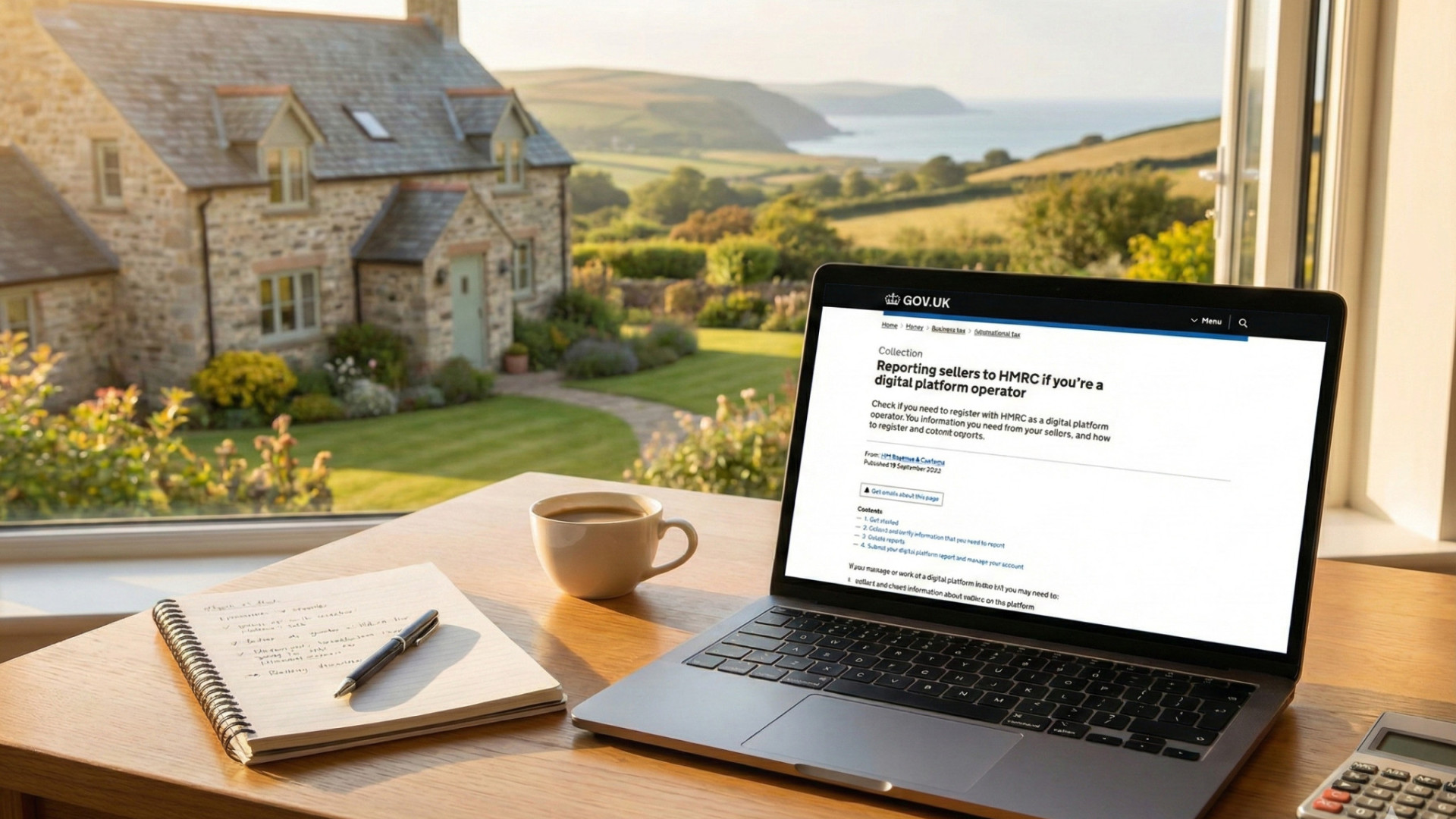
This change is driven by the “Model Reporting Rules for Digital Platforms” (MRDP), often referred to as the Intermediaries Scheme. While the terminology sounds technical, the concept is simple: to tackle tax evasion and ensure a level playing field, digital platforms and agencies are now legally mandated to share seller income data directly with HMRC.
If you are a holiday home owner, this isn’t a cause for panic, but it is a reason to be prepared. This post will guide you through exactly what is being shared, who is doing the sharing, and what you need to do to ensure your own records match the official reports.
The New Reporting Landscape
The new regulations place the burden of reporting on “Reporting Platform Operators” (RPOs). This includes major digital platforms like Airbnb and Vrbo, but crucially, it also includes many UK-based holiday letting agencies like Herdwick Cottages, that facilitate payments and bookings.
Here is what you need to know about how this affects you:
1. What Information Is Being Shared?
We are now required to collect and verify specific “due diligence” data about you (the “Seller”). They must report this to HMRC annually. The data required depends on how you operate your business, i.e. as an Individual, a Partnership or a Limited Company and might include:
- Personal Details: Your full name, primary address, and date of birth.
- Tax Identification Numbers (TIN’s): Your National Insurance Number, Company Registration or Partnership UTR Number, depending on your business setup.
- Financial Details: The bank account details where your income is paid.
- Property Data: The address of your holiday let and the number of days it was rented.
2. Understanding “Consideration” (Your Income)
The figure reported to HMRC is referred to as “Consideration”. This is the net amount paid or credited to you.
- It is calculated on a cash basis, meaning it covers money actually received during the calendar year (1 January to 31 December), regardless of when the booking took place.
- Refunds and cancellations are deducted. If a refund happens in a later reporting period, the platform must submit a “corrected report” for the previous year.
- The report will show the total Consideration paid to you, alongside a breakdown of any fees, commissions, or taxes withheld by the platform.
3. The Timeline
The rules officially kicked in on 1 January 2024.
- Data Collection: Platforms have been collecting data since 1 January 2024.
- First Report: The first report for 2024 data was submitted to HMRC by 31 January 2025.
- Subsequent Reports: Ongoing reports must be submitted to HMRC by 31 January of the following year. For example, 2025 data must be reported by 31 January 2026, 2026 data by 31 January 2027, and so forth.
4. Joint Owners and Co-Hosts
A common question arises regarding jointly owned properties. The regulations require the platform to perform due diligence and reporting on the registered seller.
- If you and your partner own a property, but only you are the named person on the agency contract, the platform will report the full income under your name.
- You do not need to ask the platform to investigate other co-owners if they are not contracted agents. It remains your responsibility to split the income correctly on your personal Self-Assessment tax returns.
5. What if I Use Multiple Platforms?
When we list your property on third-party sites like Airbnb, the reporting duties can get complicated. Generally, because we are registered on Airbnb, we are considered the “Seller” by Airbnb. The agency then reports your income (the owner) to HMRC. This ensures the income chain is tracked all the way to the property owner.
Summary
The introduction of the HMRC Intermediaries Scheme marks a significant step towards total transparency in the holiday let sector. While it imposes strict penalties on platforms for non-compliance—up to £5,000 for late reports or failure to verify seller info—it fundamentally changes nothing about your tax liability. You simply need to ensure that the income you declare matches the “Consideration” your agency reports to HMRC.
Next Steps for Owners
To ensure you are fully compliant and to avoid any administrative headaches, we recommend taking the following steps immediately:
- Check Your Details: Contact us or log into your owner portal to ensure your “Seller Information” is correct. Inaccurate data could flag your account for an unnecessary investigation by HMRC.
- Cooperate with Due Diligence: If we request a copy of documentation, such as your passport, utility bill, or evidence of your National Insurance number or Partnership UTR number, please provide it promptly. If a seller refuses to cooperate, we (platforms) are advised to freeze payments or suspend listings until the data is provided.
- Review Joint Income: If you are a joint owner but the sole registered contact, ensure your personal tax return accurately reflects your share of the income, even if the platform reports the gross total against your name.
We are more than happy to help with any questions you may have, so please don’t hesitate to get in touch. Alternatively, we recommend visiting the Professional Association of Self-Caterers (PASC UK) website. PASC UK supports the self-catering, short-term lets, and holiday lets sector in England and Wales.