
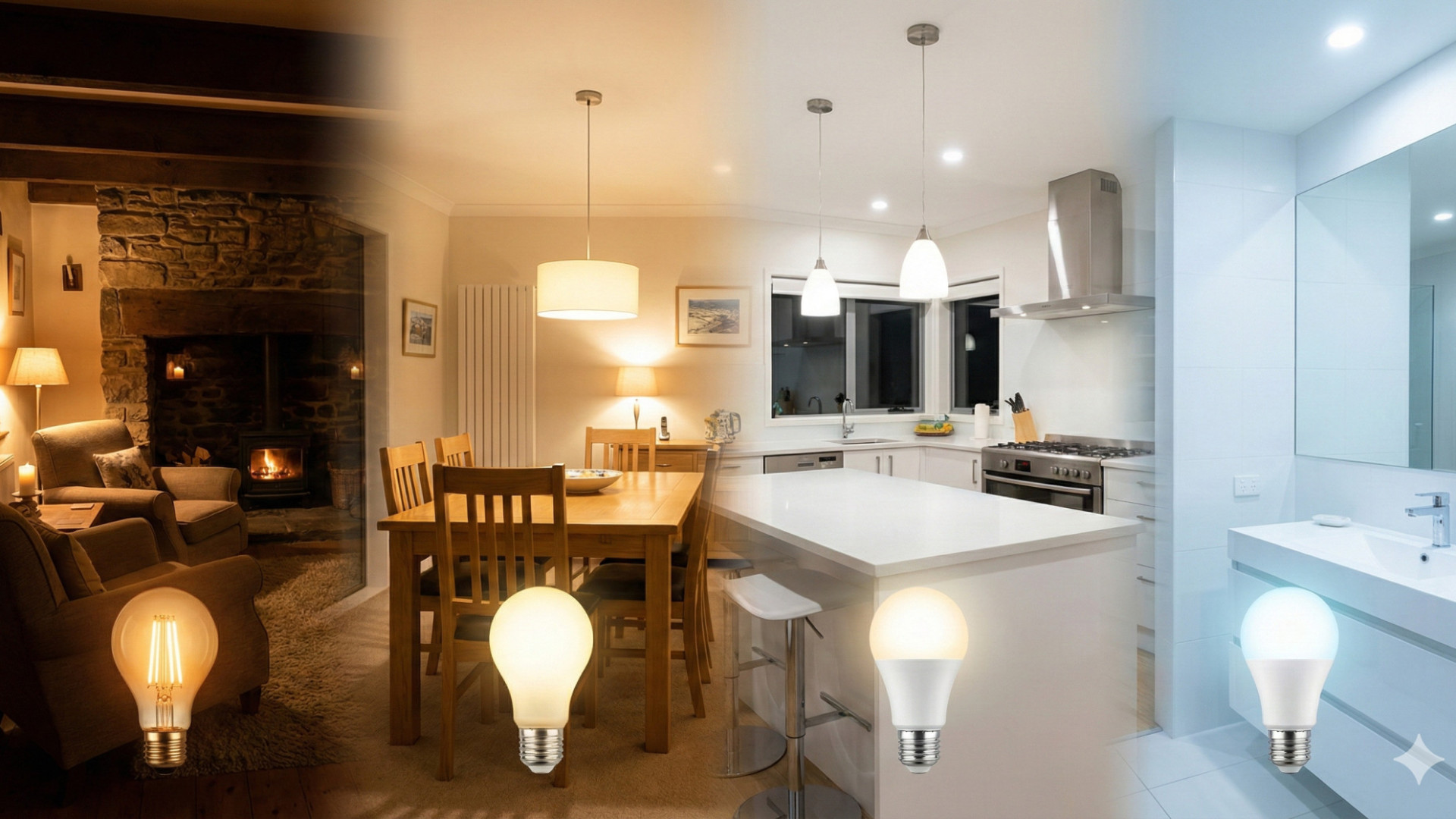
Have you ever walked into a room that was perfectly clean and well-furnished, yet somehow felt “cold,” “unsettled,” or just not quite right? You couldn’t put your finger on it, but you didn’t feel compelled to kick off your shoes and relax.
For holiday home owners, creating that instant feeling of relaxation—often called hygge—is the holy grail. While we spend thousands on sofas, soft furnishings, and welcome hampers, we often overlook the single most influential factor in setting a room’s mood: the lightbulbs.
In the days of old tungsten filament bulbs, this wasn’t an issue. You bought a bulb, it glowed a warm, cosy yellow, and that was that. But with the arrival of energy-efficient LEDs, the market flooded with options. Suddenly, we have “Cool White,” “Warm White,” and “Daylight,” and unfortunately, picking the wrong one—or worse, mixing them up—can turn a cosy cottage into something resembling a dental surgery.
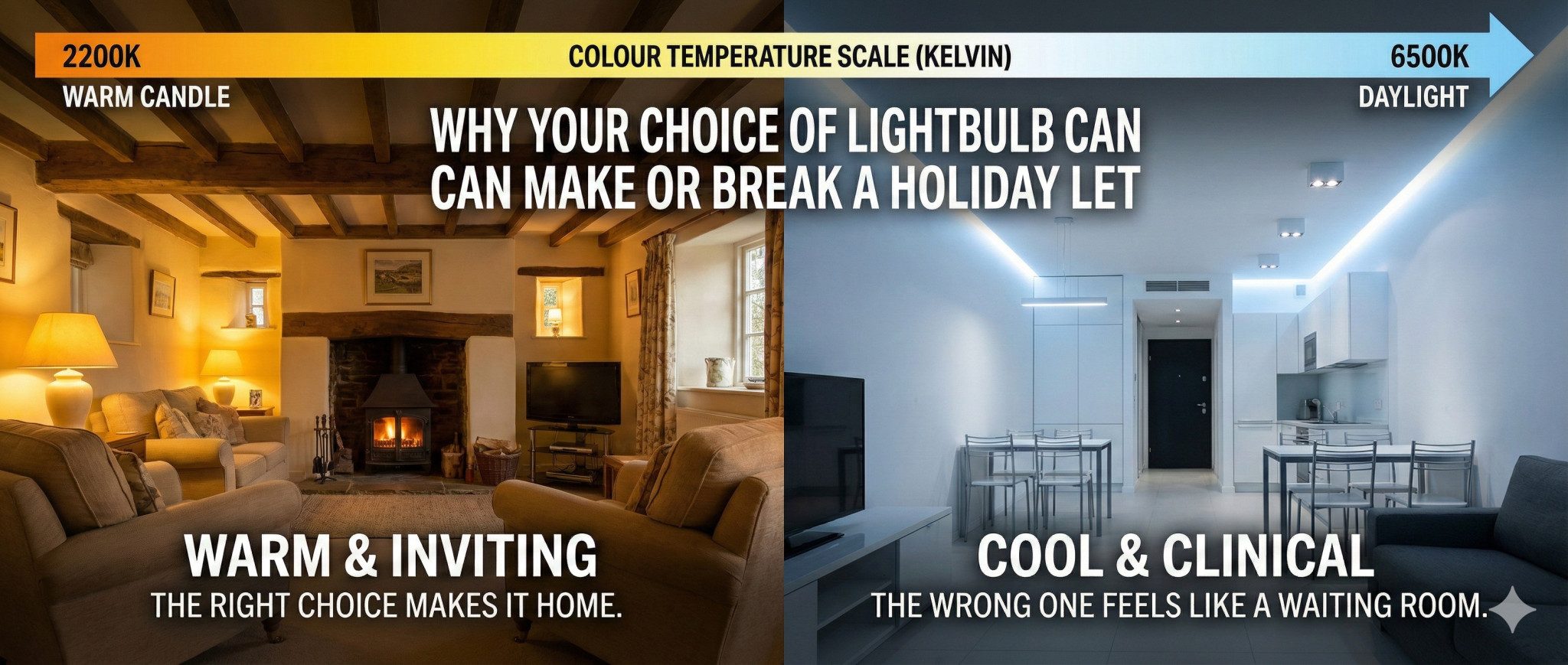
Understanding the “Temperature” of Light
To master your property’s ambience, you don’t need a degree in physics, but you do need to understand Kelvins (K). This is the unit used to measure the “colour temperature” of a lightbulb.
Think of it like a sliding scale:
- Low Numbers (2000K – 3000K): This is Warm White. It produces a yellowish, golden light similar to a candle or an old-fashioned filament bulb. It signals to the brain that it is time to relax.
- Medium Numbers (3100K – 4500K): This is Cool White. It is a crisp, neutral white light. It looks modern and clean but can feel a bit clinical in the wrong setting.
- High Numbers (4600K – 6500K+): This is Daylight. It has a harsh blue tint. While excellent for hospitals or workshops, it is generally an atmosphere-killer in a holiday home.
The Golden Rule: Consistency is King
The single most common lighting mistake I see in holiday lets is the use of mixed colour temperatures within the same room.
Imagine a living room where the main ceiling pendant is a crisp Cool White (4000K), but the table lamp in the corner is a golden Warm White (2700K). The clash is visually jarring. It creates what designers call “visual noise.” Even if the guest doesn’t consciously notice the bulbs, their brain registers the space as “messy” or “uncoordinated.”
Why consistency matters:
- Photography: Your listing photos are your shop window. Cameras are very sensitive to light temperature. A room with mixed lighting will appear odd in photos, with some areas appearing blue and others appearing orange.
- Psychology: Consistency feels calm. When all lights in a room match, the space feels cohesive and designed.
- Guest Comfort: You want to guide the guest’s mood. If they are in the lounge, you want them to relax (Warm White). If you hit them with a blast of blue-tinted light from a mismatched reading lamp, it disrupts that cosy atmosphere.
A Room-by-Room Guide for Holiday Homes
So, which bulb should you choose? While personal taste plays a part, here is the “safe” formula for a welcoming holiday property:
- Living Rooms & Bedrooms (Go Warm):
Stick to 2700K – 3000K. You want these rooms to feel cosy. A “Cool White” bulb here can make expensive bedding look cheap and makes skin tones look washed out. - Bathrooms & Kitchens (The Debate):
Many people prefer Cool White (4000K) here because it feels clean and helps with tasks like chopping veg or applying makeup. However, if you have an open-plan kitchen/diner, I strongly recommend sticking to Warm White throughout the whole space to avoid that jarring clash between the kitchen zone and the dining zone. - Reading Lamps:
Always check these! If a guest turns on a bedside lamp to read, they want a soft glow, not an interrogation light.
What should you do next?
Lighting is the silent mood-setter of your holiday home. It is a small detail that has a significant psychological impact on how guests perceive your property. The goal is to avoid the “clinical” look of Cool White in relaxation areas and, crucially, to ensure that every bulb in a single room, ceiling lights, table lamps, etc., emits the same colour of light.
Your Action Plan:
- The “Bulb Audit”: Next time you are at your property, turn on every light in every room during the daytime and again at dusk. Look for any bulbs that stand out as “bluer” or “whiter” than the others.
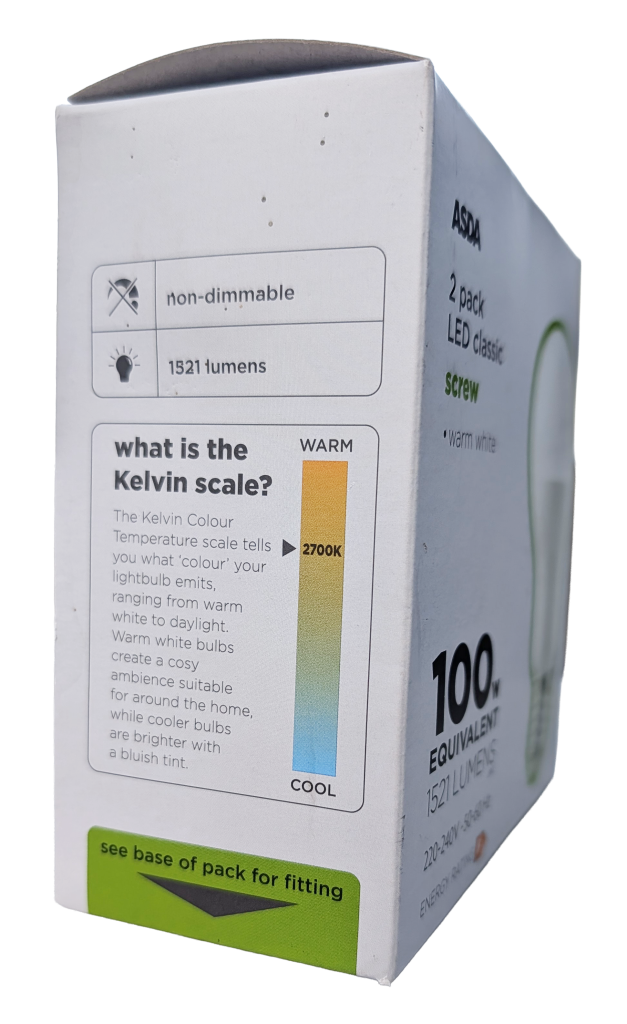
- Check the Box: When buying replacements, ignore the marketing names like “Soft White” or “Bright White”—they vary by brand. Look specifically for the Kelvin (K) number on the box.
- Standardise Spares: Buy a bulk pack of your chosen bulbs (e.g., all 2700K for bedrooms). Remove any mismatched “rogue” bulbs from your spares cupboard so your cleaner or maintenance team doesn’t accidentally install a blue daylight bulb in your cosy bedside lamp.